
PVC pipe manufacturing has become an essential part of modern infrastructure development. Pipes produced from polyvinyl chloride are widely used in water distribution, drainage networks, irrigation systems, electrical conduit installations, and industrial piping because they combine durability with consistent performance. As demand for reliable piping solutions continues to grow, manufacturers increasingly rely on efficient production systems that deliver high output while maintaining strict quality standards.
Modern manufacturing facilities have evolved beyond basic extrusion operations. Advanced production lines integrate automated material handling, precision process control, real-time monitoring, and continuous quality inspection to improve productivity and reduce manufacturing variability. These technologies help manufacturers achieve consistent product dimensions while supporting efficient use of raw materials and energy.
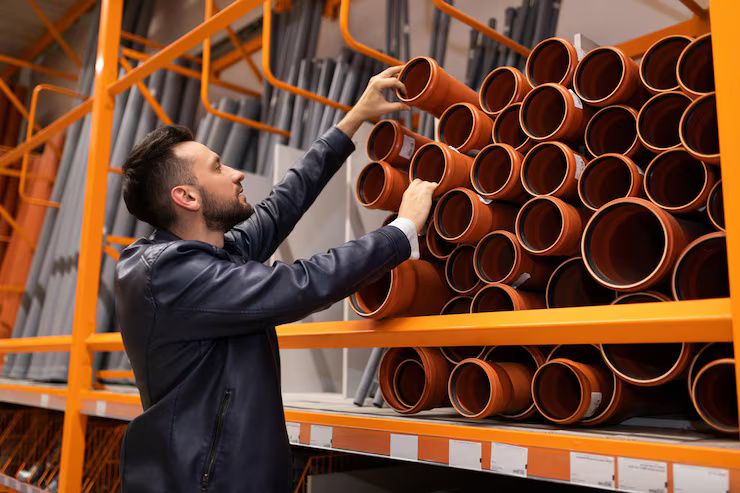
A closer understanding of PVC pipe manufacturing reveals how production equipment, engineering practices, and automation technologies work together to produce pipes that meet demanding industrial and infrastructure requirements.
Building an Efficient PVC Pipe Production Process
Efficient production begins long before material enters the manufacturing line. Careful planning of raw material preparation, equipment configuration, and process control helps establish stable operating conditions throughout the manufacturing cycle.
PVC resin is typically blended with carefully selected additives that improve processing characteristics and support the required mechanical properties of the finished pipe. Depending on the intended application, formulations may include stabilizers, lubricants, pigments, processing aids, and impact modifiers.
Consistent material preparation reduces process variation and allows downstream production equipment to operate more efficiently.
The Role of Extrusion in Pipe Manufacturing
Extrusion forms the core of PVC pipe production. During this process, prepared material enters an extruder where rotating screws transport, compress, and heat the compound until it reaches a controlled molten state.
The molten material then passes through a precision die that shapes it into a continuous pipe profile. Maintaining stable temperature, pressure, and material flow is essential because even small variations can affect wall thickness, surface finish, and dimensional accuracy.
Modern extrusion systems use advanced control technology to regulate processing conditions automatically, helping maintain consistent product quality throughout extended production runs.
Cooling, Sizing, and Dimensional Control
After leaving the extrusion die, the newly formed pipe must retain its intended shape while cooling gradually.
Vacuum sizing equipment helps establish accurate outside dimensions before the pipe enters cooling tanks. Water cooling systems remove heat in a controlled manner, preventing distortion and improving dimensional stability.
As the pipe progresses through the production line, haul-off equipment maintains steady movement while synchronized cutting systems produce finished pipe lengths according to production specifications.
Accurate coordination between these production stages is essential for maintaining consistent manufacturing quality.
Automation Improves Production Efficiency
Automation has become a defining characteristic of high-efficiency PVC pipe manufacturing systems. Modern production lines rely on sensors, programmable controllers, and digital monitoring platforms to supervise equipment throughout the manufacturing process.
Critical production parameters commonly monitored include:
- Barrel temperature
- Melt pressure
- Screw speed
- Line speed
- Cooling water conditions
- Pipe dimensions
Continuous monitoring allows automated control systems to make rapid adjustments whenever operating conditions begin to move outside established production limits.
This level of control improves consistency while reducing material waste and production interruptions.
Quality Control Throughout Manufacturing
Quality management extends across every stage of PVC pipe production rather than relying solely on final product inspection.
Raw materials are verified before entering production, while manufacturing parameters are continuously monitored during extrusion. Finished pipes undergo dimensional measurement and performance testing to confirm that they satisfy required manufacturing specifications.
Quality evaluation commonly includes:
- Diameter verification
- Wall thickness measurement
- Surface inspection
- Pressure resistance testing
- Impact performance evaluation
- Dimensional consistency checks
Integrating quality control into the production workflow helps manufacturers identify process variations early and maintain stable manufacturing performance.
Equipment That Supports Modern Production Systems
High-efficiency manufacturing depends on the coordination of several specialized machines working as a single integrated production line.
Typical equipment includes raw material mixing systems, extrusion units, vacuum calibration tanks, cooling tanks, haul-off machines, cutting systems, and automatic stacking equipment. Digital control systems coordinate these machines to maintain synchronized production from material feeding through finished product handling.
Modular production line designs also provide flexibility, allowing manufacturers to adapt equipment configurations for different pipe diameters and production requirements.
Energy Management and Operational Performance
Energy efficiency has become an increasingly important consideration in PVC pipe manufacturing. Production facilities seek to optimize equipment performance while reducing unnecessary energy consumption across the manufacturing process.
Modern extrusion systems incorporate high-efficiency motors, variable-frequency drives, and optimized heating controls that improve energy utilization without compromising production stability.
Manufacturers also monitor compressed air systems, cooling water circulation, and production scheduling to identify opportunities for operational improvements. These initiatives contribute to more efficient manufacturing while supporting long-term production reliability.
Industry Standards and Manufacturing Consistency
Manufacturing consistency depends not only on advanced equipment but also on standardized production practices. Facilities commonly establish documented operating procedures, preventive maintenance programs, and process monitoring systems that support repeatable manufacturing performance.
International quality management frameworks, engineering standards, and industry testing requirements help manufacturers maintain product consistency across production batches. Regular equipment calibration and process verification further reduce variability while supporting dependable manufacturing outcomes.
By combining standardized operating practices with automated production technologies, manufacturers can maintain consistent quality even during high-volume production.
The Continuing Evolution of PVC Pipe Manufacturing
Advances in industrial automation continue to influence PVC pipe manufacturing. Modern production facilities increasingly integrate digital monitoring, predictive maintenance, and data-driven process optimization into daily operations.
Production information collected from sensors and control systems allows manufacturers to evaluate equipment performance, identify efficiency opportunities, and improve process stability over time. As manufacturing technologies continue to develop, production systems are expected to become even more intelligent, connected, and resource efficient while maintaining high standards of product quality.
Conclusion
PVC pipe manufacturing combines material science, precision extrusion, automated process control, and integrated quality management to produce reliable piping solutions for a wide range of applications. High-efficiency production systems coordinate every stage of manufacturing, from raw material preparation to final inspection, ensuring consistent dimensional accuracy and dependable performance. As automation and digital manufacturing technologies continue to advance, PVC pipe production will remain focused on improving efficiency, operational reliability, and long-term manufacturing consistency.