Moving industrial equipment, large construction components, and heavy machinery requires careful coordination beyond ordinary freight transportation.
Oversized load transportation makes it possible to move cargo that exceeds standard road transport dimensions or weight limits, using specialized trailers, suitable towing vehicles, and carefully planned routes.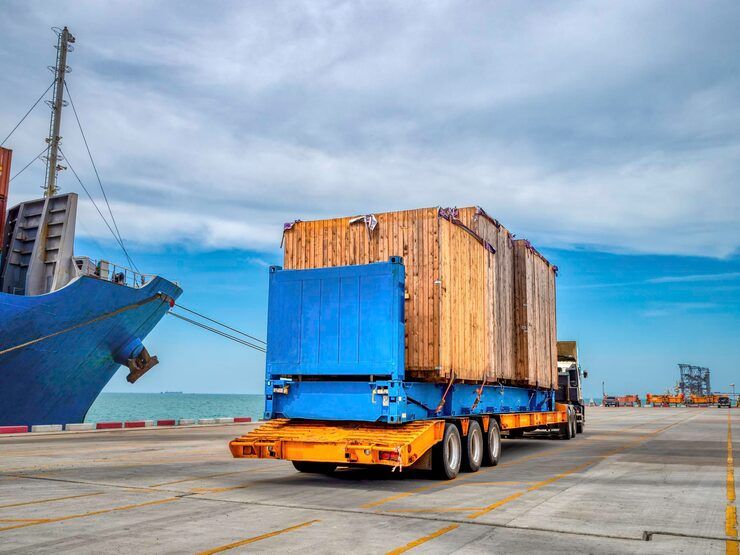
Industries such as construction, energy, infrastructure, mining, and manufacturing depend on heavy hauling to transport equipment that cannot be disassembled easily or moved through conventional logistics networks. These shipments often involve complex road conditions, regulatory requirements, and coordination between multiple transportation teams.
Understanding how oversized loads are prepared, permitted, secured, and transported helps explain why successful heavy hauling depends on engineering, route planning, equipment selection, and disciplined execution. Each stage contributes to protecting the cargo, road users, transportation personnel, and surrounding infrastructure.
What Makes a Load Oversized?
An oversized load exceeds one or more standard legal limits for vehicle width, height, length, or weight. The exact thresholds depend on the jurisdiction, road classification, vehicle configuration, and applicable transportation regulations.
Typical examples include wind turbine blades, industrial pressure vessels, transformers, bridge sections, mining equipment, and large manufacturing machinery. Some shipments are unusually wide or tall, while others are exceptionally heavy despite fitting within ordinary vehicle dimensions.
These distinctions matter because different restrictions create different transportation challenges. A tall load may encounter bridges and overhead utilities, while a wide shipment may require additional road space, specialized routing, or temporary traffic controls. Excessive weight can place additional stress on bridges, pavements, axles, and vehicle components.
Oversized transportation therefore begins with measuring the cargo accurately and identifying every dimension or weight characteristic that could affect its movement.
Selecting the Right Heavy-Haul Equipment
The trailer and tractor configuration must match the shipment's physical characteristics. Choosing equipment involves more than checking whether the cargo can fit on the trailer. Engineers and transport planners must also consider axle loads, load distribution, ground clearance, turning radius, and the stability of the combined vehicle.
Several specialized trailer configurations serve different transportation requirements.
Lowboy trailers: Commonly used for excavators, bulldozers, and other tall construction machinery because their low deck height helps reduce overall transport height.
Extendable trailers: Designed to accommodate long cargo, including structural steel sections and certain wind-energy components.
Multi-axle platform trailers: Distribute heavy loads across multiple axles to accommodate substantial weight within applicable limits.
Modular hydraulic trailers: Use configurable axle lines and hydraulic suspension systems to move exceptionally heavy industrial equipment.
Specialized blade trailers: Support the transportation of long wind turbine blades, allowing configurations suited to their length and geometry.
The tractor unit must also provide suitable pulling power, braking capability, and compatibility with the trailer. For extremely heavy shipments, multiple power units may be required depending on the route, gradient, and operating conditions.
Planning a Route for Safe Heavy Hauling
Route planning is one of the most technically demanding parts of oversized load transportation. A road that accommodates an ordinary truck may be unsuitable for a vehicle carrying a tall, wide, or unusually heavy shipment.
Transport planners assess the entire journey rather than relying solely on standard navigation software. They examine bridge clearances, overhead cables, road widths, turning radii, gradients, pavement restrictions, and potential obstacles along the route.
Bridge capacity requires particular attention when the shipment is exceptionally heavy. The total weight of the vehicle and cargo, together with axle spacing and load distribution, can influence whether a structure can safely accommodate the crossing.
Urban intersections, roundabouts, narrow rural roads, construction zones, and temporary traffic arrangements can introduce further complications. In some cases, the route may require temporary removal of roadside obstructions, coordinated utility work, or restrictions on other traffic.
A route survey helps identify these issues before departure. When conditions change during transportation, the operating team must evaluate the implications rather than making an unplanned diversion that could introduce new hazards.
Permits, Regulations, and Escort Requirements
Oversized and overweight shipments frequently require special permits from the relevant transportation authorities. Requirements vary by country, state, road authority, and shipment characteristics.
Permit applications may specify the approved route, vehicle dimensions, axle configuration, travel periods, and other operating conditions. Certain movements may also require restrictions on travel during peak traffic hours, holidays, adverse weather, or nighttime conditions.
Escorts are another important consideration. Depending on local regulations and shipment characteristics, a movement may require pilot vehicles, police assistance, or other traffic-management support. Escort personnel help communicate hazards, warn approaching road users, and assist with managing restricted road space.
Permits should be obtained before the shipment moves, and the transport team must understand the conditions attached to each authorization. A permit issued for one route or vehicle configuration does not automatically authorize a different arrangement.
For international or cross-border movements, planners must account for regulatory differences between jurisdictions and confirm that all necessary approvals remain valid throughout the journey.
Securing Cargo and Managing Load Stability
Proper cargo securement is essential because heavy equipment can shift under braking, acceleration, cornering, or uneven road conditions. Even a small movement may affect vehicle stability, damage the cargo, or create a serious hazard for other road users.
The securement method depends on the cargo's weight, shape, center of gravity, designated attachment points, and sensitivity to movement. Chains, straps, blocking, bracing, and engineered restraint systems may be used where appropriate.
The equipment must be rated for its intended application, and the restraint arrangement must comply with applicable regulations. Tie-down placement should account for the directions in which the load could move, rather than simply applying as many restraints as possible.
Load distribution is equally important. Excessive loading on a particular axle can create regulatory and mechanical problems, while an unsuitable center of gravity can reduce stability. Tall or irregularly shaped cargo may also respond differently to crosswinds and sudden changes in direction.
Before departure, personnel should verify that restraints are correctly installed, the load is stable, and the vehicle and trailer are ready for operation. Checks may need to be repeated during the journey, especially after initial movement or when operating conditions warrant additional inspection.
Managing Risks During Transportation
Even well-planned shipments can encounter unexpected conditions. Heavy-haul operations therefore require active risk management throughout the journey.
Weather can affect both the vehicle and the cargo. Strong crosswinds are particularly relevant for tall or broad shipments, while heavy rain, ice, and reduced visibility can increase braking and handling risks. Transport teams may need to delay departure or suspend movement when conditions exceed safe operating limits.
Mechanical readiness also matters. Brakes, tires, suspension components, steering systems, lighting, and coupling equipment must be suitable for the planned load and route. Because heavy combinations have different handling characteristics from ordinary vehicles, drivers need appropriate experience and training.
Communication between the driver, dispatch team, escort personnel, and site representatives helps coordinate traffic control, route adjustments, and arrival arrangements. Clear procedures are especially valuable when the shipment must pass through restricted areas or reach a site with limited maneuvering space.
Coordinating Delivery at the Destination
A heavy-haul movement does not end when the vehicle reaches the destination entrance. The receiving site must be prepared to accept the shipment safely and efficiently.
Industrial facilities and construction sites may need adequate access roads, turning space, ground-bearing capacity, unloading equipment, and designated staging areas. A trailer that can reach the site may still be unable to position itself correctly for unloading.
Delivery planning should establish who is responsible for receiving the cargo, inspecting it, coordinating lifting operations, and confirming that the designated unloading area is ready. If cranes or other lifting systems are required, their capacity and operating arrangements must suit the load.
Timing also matters. Coordinating arrival with site access and available handling equipment can reduce waiting time and prevent congestion. For particularly large components, delivery schedules may need to align with construction milestones or installation windows.
Technology and Efficiency in Modern Heavy Hauling
Digital planning tools are helping transportation teams evaluate routes, coordinate permits, monitor vehicles, and document operational conditions. Mapping systems can support route surveys, while fleet-management platforms provide visibility into vehicle location and progress.
Telematics can help monitor vehicle performance and identify maintenance concerns. Digital documentation can also improve coordination between transport operators, permit authorities, escort providers, and receiving facilities.
However, technology does not replace physical inspections or engineering judgment. Route data may not capture every temporary obstruction, road-surface change, or site-specific constraint. Experienced personnel must verify critical information and respond appropriately when actual conditions differ from the plan.
Efficiency in heavy hauling comes from reducing avoidable delays while maintaining safety and regulatory compliance. The shortest route or fastest schedule is not necessarily the most practical option if it introduces additional infrastructure risks or operational uncertainty.
Frequently Asked Questions
What types of cargo require oversized load transportation?
Common examples include construction machinery, industrial transformers, wind turbine components, large pressure vessels, mining equipment, and prefabricated structural sections. Requirements depend on the shipment's dimensions, weight, and local transport regulations.
Why is route planning so important for heavy hauling?
Route planning identifies potential restrictions such as low bridges, narrow roads, sharp turns, weak infrastructure, and overhead obstacles. Addressing these issues before departure helps prevent delays and reduces safety risks.
Are special permits required for every oversized load?
Not necessarily. Permit requirements depend on the shipment's dimensions, weight, vehicle configuration, and jurisdiction. Transport operators must verify the applicable rules before moving the cargo.
How is heavy cargo secured during transportation?
Cargo is secured using suitable restraints, blocking, bracing, and other methods selected for its weight, shape, and movement risks. Proper load distribution and correctly rated equipment are essential for stability.
What makes a heavy-haul transportation project efficient?
Efficiency depends on suitable equipment, accurate route planning, timely permits, secure cargo, trained personnel, effective communication, and a prepared delivery site. These elements work together to reduce preventable delays without compromising safety.
Conclusion
Oversized load transportation combines specialized equipment, engineering considerations, regulatory compliance, and detailed logistics planning. Every shipment presents its own requirements, from selecting the correct trailer to securing the cargo and confirming that the destination can accommodate delivery.
Safe and efficient heavy hauling depends on treating transportation as a coordinated operation rather than a simple vehicle movement. Careful preparation, experienced personnel, and continuous risk management help ensure that large and heavy cargo reaches its destination in suitable condition.