
Injection molding machines have become an essential part of modern manufacturing, enabling the efficient production of plastic components used across countless industries. From automotive assemblies and medical devices to consumer electronics and industrial equipment, these machines support high-volume manufacturing while maintaining consistent product quality.
As production requirements continue to evolve, manufacturers seek equipment capable of delivering greater precision, faster cycle times, and improved material efficiency. Modern injection molding technology combines advanced mechanical engineering, automation, and digital control systems to meet these demanding production expectations.
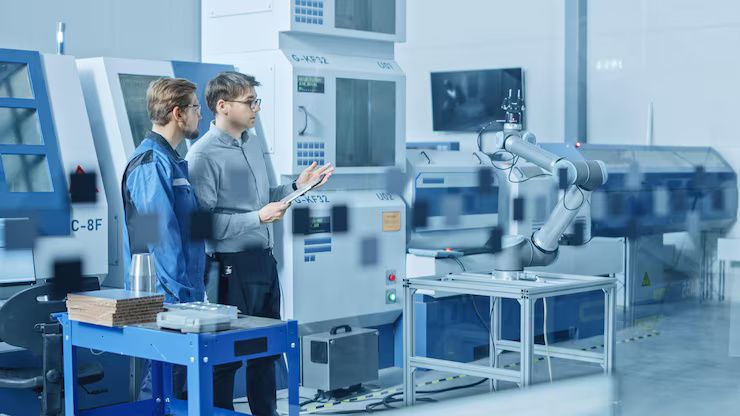
A clear understanding of injection molding machines helps manufacturers, engineers, and industry professionals appreciate how these systems transform raw polymer materials into complex, repeatable products. Every stage of the process contributes to production accuracy, operational efficiency, and long-term manufacturing reliability.
How Injection Molding Machines Operate
Injection molding is a manufacturing process that produces plastic components by injecting molten material into a precisely engineered mold cavity. Once the material cools and solidifies, the mold opens and the finished part is ejected before the next production cycle begins.
Each production cycle follows a carefully controlled sequence. Plastic pellets are fed into a heated barrel where a rotating screw melts and conveys the material forward. The molten polymer is then injected into the mold under controlled pressure, ensuring the cavity is completely filled before cooling begins.
Temperature, injection pressure, holding pressure, and cooling time are continuously monitored to achieve consistent part quality while minimizing production variation.
Core Components of an Injection Molding Machine
Every injection molding machine consists of several integrated systems that work together throughout the manufacturing process.
The injection unit prepares and delivers molten plastic to the mold. It includes the hopper, heated barrel, reciprocating screw, and injection nozzle. These components ensure the material reaches the correct temperature and viscosity before entering the mold.
The clamping unit securely holds the mold closed during injection. Hydraulic, electric, or hybrid clamping systems generate the force required to resist the high pressures created during material injection.
Additional systems include:
- Machine frame
- Hydraulic or electric drive systems
- Control panel
- Cooling circuits
- Mold mounting platens
- Ejection mechanism
- Safety guarding
- Process monitoring sensors
Each component contributes to stable machine operation and repeatable manufacturing performance.
Types of Injection Molding Machines
Different manufacturing applications require different machine configurations depending on production volume, material characteristics, and precision requirements.
Hydraulic Machines
Hydraulic injection molding machines have long been used for heavy-duty manufacturing applications. They provide high clamping force and are well suited for producing large components requiring significant injection pressure.
Their robust construction makes them common in automotive, industrial equipment, and large molded product manufacturing.
Electric Machines
Electric injection molding machines replace hydraulic actuators with servo-driven motors. This design improves positioning accuracy, repeatability, and energy efficiency while reducing maintenance requirements associated with hydraulic systems.
These machines are frequently selected for precision manufacturing involving medical products, electronic components, and high-tolerance plastic parts.
Hybrid Machines
Hybrid systems combine hydraulic power with electric drive technology to balance production efficiency, precision, and operational flexibility. Many manufacturers select hybrid equipment when production requirements involve varying part sizes and processing conditions.
Materials Commonly Used
Injection molding machines process a wide variety of thermoplastic and engineering materials.
Frequently used polymers include polypropylene, polyethylene, acrylonitrile butadiene styrene (ABS), polycarbonate, nylon, polyoxymethylene, and thermoplastic elastomers. Each material offers distinct mechanical, thermal, and chemical properties suited to different industrial applications.
Material selection depends on product requirements such as strength, flexibility, impact resistance, dimensional stability, temperature performance, and environmental exposure.
Proper material handling, drying, and processing conditions are equally important for maintaining consistent product quality throughout production.
Automation Improves Manufacturing Efficiency
Automation has become a defining characteristic of modern injection molding operations.
Robotic systems remove finished parts, insert components, trim excess material, and transfer products to downstream processes. Automated material handling systems continuously supply raw materials while minimizing manual intervention.
Integrated process monitoring allows manufacturers to track production parameters in real time. Machine controllers automatically adjust operating conditions when necessary, helping maintain stable production quality while reducing material waste.
Automation also contributes to improved workplace safety by reducing direct operator interaction with moving machinery during production.
Quality Control Throughout Production
Consistent product quality depends on careful control of every manufacturing stage rather than relying solely on final inspection.
Manufacturers monitor injection pressure, melt temperature, mold temperature, cooling time, and cycle consistency throughout production. Even small variations can influence part dimensions, surface finish, or structural integrity.
Inspection methods often include dimensional verification, visual examination, mechanical testing, and statistical process control. Digital monitoring systems further support quality assurance by recording production data for continuous process improvement.
Well-maintained molds also play an essential role in achieving repeatable manufacturing performance over extended production cycles.
Industrial Applications
Injection molding machines support manufacturing across numerous industrial sectors due to their ability to produce complex shapes with excellent repeatability.
Common applications include:
- Automotive interior and exterior components
- Medical equipment and laboratory products
- Consumer electronics housings
- Industrial machinery parts
- Packaging products
- Household appliances
- Construction products
- Electrical connectors
- Consumer goods
- Agricultural equipment components
The flexibility of the injection molding process allows manufacturers to produce both high-volume standardized products and specialized technical components.
Emerging Trends in Injection Molding Technology
Advances in manufacturing technology continue improving injection molding capabilities.
Smart manufacturing systems increasingly connect machines with factory-wide production networks, allowing real-time monitoring, predictive maintenance, and production optimization. Advanced sensors provide continuous feedback that supports process stability and improved operational efficiency.
Manufacturers are also exploring improved energy management, advanced servo technologies, and digital simulation tools that shorten product development cycles while enhancing production consistency.
Growing interest in recycled polymers and bio-based materials is encouraging machine manufacturers to develop equipment capable of processing a broader range of sustainable materials without compromising production quality.
Conclusion
Injection molding machines remain one of the most important technologies in modern manufacturing, enabling efficient production of high-quality plastic components across a wide range of industries. Their combination of precision engineering, automation, and controlled processing allows manufacturers to achieve consistent results while supporting demanding production schedules.
As manufacturing continues to evolve, advances in machine design, digital control systems, and material processing technologies will further enhance productivity, operational efficiency, and product quality. Organizations that understand the capabilities and best practices associated with injection molding equipment are better positioned to support reliable, high-performance manufacturing operations.