
Industrial chemicals manufacturing sits at the foundation of countless industries, supplying the materials required for construction, agriculture, energy, transportation, healthcare, and consumer products. From basic compounds used in large-scale processing to specialized formulations designed for specific applications, chemical production supports many of the systems that modern economies depend on every day.
As industrial demand continues to evolve, manufacturers are under increasing pressure to improve efficiency, maintain consistent product quality, and operate within strict environmental and safety requirements. These expectations have accelerated the adoption of advanced production technologies across chemical manufacturing facilities.
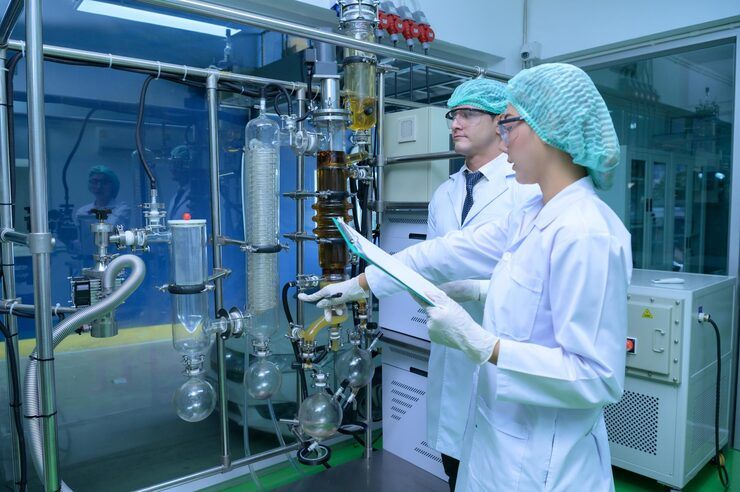
Understanding how industrial chemicals are produced provides valuable insight into one of the world's most complex manufacturing sectors. The technologies, processes, and operational systems used throughout chemical plants illustrate how modern production combines engineering, automation, and process control to achieve reliable results at scale.
The Manufacturing Environment Behind Industrial Chemicals
Industrial chemical production involves transforming raw materials into substances that can be used directly or serve as building blocks for other products. Depending on the desired output, manufacturing may involve physical transformations, chemical reactions, purification processes, or blending operations.
Many facilities operate continuously for extended periods to maintain production efficiency and process stability. Unlike discrete manufacturing, where individual products move through assembly stages, chemical manufacturing often relies on continuous-flow systems that process large volumes of material without interruption.
The complexity of these operations requires careful management of temperature, pressure, flow rates, and material composition. Even minor variations can influence product consistency and overall process performance.
Core Production Technologies Used in Chemical Manufacturing
Modern chemical plants utilize a range of production technologies designed to control reactions, improve efficiency, and maintain product quality.
Process Reactors
Reactors serve as the primary location where chemical transformations occur. Different reactor designs are selected based on reaction requirements, production volume, and operating conditions.
Common reactor types include:
- Batch reactors
- Continuous stirred-tank reactors
- Plug flow reactors
- Fluidized bed reactors
Each design supports specific manufacturing objectives and process characteristics.
Separation and Purification Systems
Once chemical reactions are complete, products often require separation from by-products, solvents, or impurities. Purification technologies help ensure the final material meets required specifications.
Frequently used systems include:
- Distillation columns
- Filtration units
- Centrifuges
- Absorption systems
- Membrane separation technologies
These technologies play a critical role in maintaining product quality and process efficiency.
Material Handling Infrastructure
Chemical production depends on the safe movement of raw materials and finished products throughout the facility.
Manufacturers commonly use:
- Storage tanks
- Piping networks
- Conveying systems
- Pumping stations
- Bulk transfer equipment
Well-designed material handling systems reduce operational risks while supporting continuous production.
Automation and Digital Control Systems
Modern chemical manufacturing increasingly relies on automation to maintain process stability and operational consistency.
Advanced control systems continuously monitor production variables and make adjustments when conditions change. This reduces the likelihood of process deviations and improves overall reliability.
Several technologies support automated operations:
| Technology | Primary Function |
|---|---|
| Distributed Control Systems (DCS) | Centralized process management |
| Programmable Logic Controllers (PLC) | Equipment and machine control |
| Supervisory Control and Data Acquisition (SCADA) | Monitoring and data visualization |
| Industrial Sensors | Real-time process measurement |
| Human-Machine Interfaces (HMI) | Operator interaction and control |
These systems work together to provide visibility into plant operations while supporting efficient decision-making.
Process Optimization Through Data and Analytics
Chemical manufacturing generates large volumes of operational data. Modern production technologies allow facilities to collect, analyze, and utilize this information to improve performance.
Process analytics can help identify:
- Equipment performance trends
- Production bottlenecks
- Energy consumption patterns
- Process inefficiencies
- Maintenance requirements
Rather than relying solely on manual observation, manufacturers can use data-driven insights to support process improvements and operational planning.
The integration of industrial analytics has become an increasingly important part of modern manufacturing strategies.
Quality Management in Chemical Production
Product consistency is essential in industrial chemical manufacturing because many downstream industries depend on precise material specifications.
Quality management begins with raw material verification and continues throughout the production process. Manufacturers often implement multiple inspection and testing stages to ensure products meet established requirements.
Common quality control activities include:
- Sampling and laboratory analysis
- Process monitoring
- Batch verification
- Contamination control
- Documentation and traceability
International standards developed by organizations such as International Organization for Standardization help establish quality management frameworks that support consistency across manufacturing operations.
Quality assurance programs not only protect product performance but also contribute to regulatory compliance and customer confidence.
Safety Considerations in Chemical Manufacturing Facilities
Safety is a central element of industrial chemical production. Manufacturing environments may involve high temperatures, pressurized systems, reactive materials, or hazardous substances that require careful management.
Modern facilities use multiple layers of protection to reduce operational risks.
These measures often include:
- Process safety systems
- Emergency shutdown mechanisms
- Hazard monitoring equipment
- Employee training programs
- Equipment inspection procedures
Risk management is integrated into facility design, production planning, and daily operations. Maintaining a strong safety culture remains a key priority across the chemical industry.
Environmental Performance and Resource Efficiency
Environmental responsibility has become an increasingly important consideration within industrial manufacturing operations.
Chemical producers are adopting technologies that help reduce emissions, improve resource utilization, and minimize waste generation. Process improvements frequently focus on increasing efficiency while lowering environmental impact.
Examples include:
- Energy recovery systems
- Water recycling technologies
- Emission control equipment
- Waste reduction programs
- Process optimization initiatives
Many facilities also incorporate environmental management systems that support regulatory compliance and sustainability objectives.
These efforts demonstrate how operational performance and environmental stewardship are increasingly linked within modern manufacturing strategies.
Emerging Technologies Shaping Production Operations
The chemical manufacturing sector continues to incorporate new technologies that improve visibility, efficiency, and operational control.
Several developments are influencing plant operations:
- Industrial Internet of Things (IIoT) connectivity
- Advanced process control systems
- Predictive maintenance platforms
- Digital twins
- Artificial intelligence-assisted analytics
These technologies provide deeper insight into production activities while helping manufacturers identify opportunities for performance improvement.
Rather than replacing traditional engineering principles, they enhance the ability of facilities to manage increasingly complex manufacturing environments.
Conclusion
Industrial chemicals manufacturing combines sophisticated engineering, process control, automation, and quality management to produce essential materials for modern industries. Modern production technologies support efficient operations, consistent product quality, and improved safety across manufacturing facilities. As digital tools and advanced process systems become more integrated into production environments, chemical manufacturers continue to refine how materials are produced, monitored, and managed at industrial scale.